What Makes a Warehouse Mezzanine Load-Bearing Safe
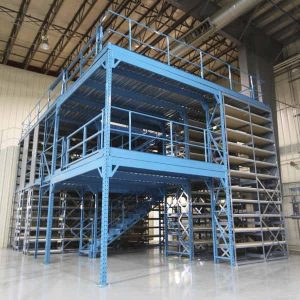
At Commander Warehouse, we’ve seen mezzanine systems built to last decades and others that were a liability from day one. The difference rarely comes down to budget. It comes down to understanding what load-bearing safety actually requires: structural design, engineering certification, and how the space is managed once it’s in service. If you’re evaluating a new mezzanine installation or questioning the integrity of an existing one, here’s what you need to know.
Load Capacity Is Not a Single Number
This is where most misunderstandings start. A mezzanine’s load rating describes distributed load: weight spread evenly across the surface, measured in pounds per square foot (PSF). Real warehouse operations don’t work that way.
There are three load types every mezzanine must account for:
- Dead load: the weight of the structure itself, including permanent fixtures like shelving, conveyor systems, and flooring materials
- Live load: variable weight from inventory, personnel, and mobile equipment, which fluctuates constantly
- Point load: concentrated weight in a specific area, such as a stacked pallet, a stationary lift, or heavy equipment with a small footprint
Point loads are where structures get into trouble. A mezzanine rated for a given distributed load can be structurally overstressed by a concentrated weight that never gets flagged as a problem, until it is one. Any honest assessment of load-bearing safety has to address all three categories, not just the headline PSF rating.
Engineering Certification Is Not Optional
In Canada, mezzanines are classified as permanent structures. That means they fall under the National Building Code of Canada and applicable provincial and municipal codes. They require permits, stamped drawings from a licensed professional engineer (P.Eng.), and inspections.
Engineering certification confirms the structure is designed for the actual loads it will carry, establishes legally defensible load ratings posted on site, satisfies insurer requirements in the event of an incident, and documents egress requirements, guardrail specifications, and occupancy limits.
A mezzanine without engineering documentation is an unverified structure. If something goes wrong (an overload, a connection failure, an employee injury, etc.), the liability exposure is significant. The permit process exists to catch design problems before they become operational ones.
Learn some best practices for designing a mezzanine system.
Structural Design Determines Real-World Capacity
Two mezzanines with identical PSF ratings can perform very differently depending on how they’re built. Material quality and structural configuration matter as much as the load number on the sign.
Steel Grade and Column Spacing
Higher-grade structural steel carries more load per unit of weight. Column spacing is equally important: tighter spacing increases load-bearing capacity across spans, while wider spacing demands heavier beams to compensate. Cutting costs through wider spans often limits what the structure can actually carry safely over time.
Decking Material
Bar grating, solid steel plate, and composite decking all distribute load differently. The right choice depends on the application: what’s being stored, how it’s moved, and whether point load concentration is a concern in specific areas.
Connection Methods
Bolted connections support modification and disassembly, which is useful for modular systems that may need to be reconfigured. The connection method affects both structural integrity and long-term flexibility. Connections are also a critical point of inspection over the life of the structure.
Learn how to choose the right type of mezzanine for your warehouse.
Safety Doesn’t End at Installation
A mezzanine that passes engineering review on day one can become a hazard through accumulated wear, operational changes, or uncontrolled loading practices. Ongoing management is part of the safety equation.
Routine Inspection
Monthly visual checks should cover structural connections for loosening or corrosion, column bases and anchor points, decking surface for damage or deflection, and guardrails and toe boards for impact damage.
Load Management on the Floor
Post load ratings visibly, including PSF and total capacity. Establish clear traffic patterns for pallet jacks and forklifts, restrict equipment by weight class on the mezzanine level, and treat load limits as operational policy, not a suggestion.
Modifications Require Re-Engineering
Any structural change, such as adding penetrations, extending the deck, or changing the intended use, invalidates the original engineering. That means a new assessment before the modification goes in, not after. This applies to operational changes too: shifting from light storage to heavy equipment staging changes the load profile even if the structure itself stays the same.
The Bottom Line on Mezzanine Safety
Mezzanine load-bearing safety comes down to three things done right: understanding the actual load profile of your operation, getting proper engineering certification before the structure goes in, and managing the space rigorously once it’s in service. Skip any of those steps and you’re carrying risk that doesn’t show up until something fails.
We work with operations teams across Western Canada to plan and install modular mezzanine systems sized and configured for real-world use, not just the best-case load scenario. If you’re planning a new mezzanine or want a second set of experienced eyes on an existing installation, fill out our contact form and one of our team members will follow up directly.


