How to Calculate Storage Density for Your Shelving Layout
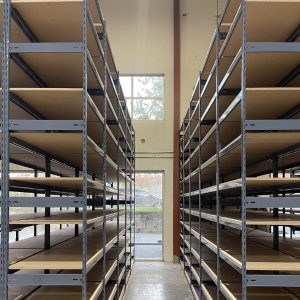
Warehouse managers across Western Canada often focus on adding more storage without first assessing how efficiently they are using existing space. At Commander Warehouse Equipment, we have helped countless operations calculate storage densities for shelving layouts, revealing opportunities they did not know existed. Understanding this metric transforms guesswork into data-driven decisions about your facility’s capacity and configuration.
Learn how to extend the lifespan of your shelving systems.
What Storage Density Actually Measures
Storage density tells you how much inventory you are holding per square foot of floor space. The basic calculation divides your total storage capacity by the total floor area dedicated to storage. For pallet racking, multiply the number of pallet positions by your average pallet cubic footage, then divide by the square footage your racking system occupies. This gives you a cubic-foot-per-square-foot ratio that makes it easier to compare different layout options or benchmark against industry standards.
The calculation becomes more nuanced when you are working with industrial shelving systems holding products of varying sizes. In these cases, measure the total cubic footage available across all shelves, then divide by the footprint your shelving units consume. Higher density means you are storing more goods in less floor space.
Learn how to prevent overloaded shelving systems.
Factors That Impact Your Results
1. Aisle Width
Aisle width requirements significantly affect storage density calculations. Narrow aisles increase density by reducing wasted space, but they also limit equipment access and may slow retrieval times. The type of material handling equipment you use determines minimum aisle widths, which directly influences how tightly you can configure your layout.
2. Ceiling Height
Ceiling height plays a crucial role that many operations overlook. Vertical space represents untapped capacity in facilities where standard racking does not reach the full height of the space. High-density storage systems and taller shelving units can dramatically improve your density numbers without expanding your building footprint.
3. Products
Fast-moving items need accessible locations, which may mean accepting lower density in high-traffic zones. Seasonal inventory or slow movers can tolerate deeper storage configurations that maximize space utilization.
Using Density Calculations to Make Better Decisions
Once you have calculated your current storage density, you have a baseline for evaluating potential improvements. If your ratio seems low compared to facilities handling similar products, you are likely leaving capacity on the table.
Compare density figures for different scenarios before committing to a layout change. Running calculations for various configurations helps you quantify the trade-offs between accessibility and capacity. Sometimes a modest decrease in density actually improves overall efficiency by speeding up picking operations.
Making Your Numbers Work Harder
Calculating storage density gives you the insight needed to optimize your warehouse layout strategically. Rather than reacting to capacity constraints with rushed expansions, you can make informed choices about racking configurations, aisle widths, and vertical space utilization. Small adjustments often unlock significant capacity gains.
Our team can assess your current density, identify improvement opportunities, and recommend solutions tailored to your workflow. Contact us at 604-980-8511 to schedule an onsite review and discover how much capacity you are actually working with.


