How Warehouse Workstations Reduce Employee Fatigue
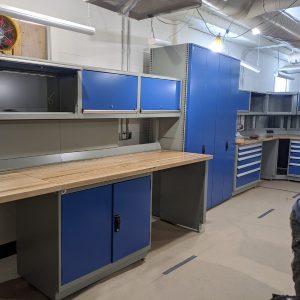
At Commander Warehouse, we’ve spent more than 50 years watching how the physical environment shapes workforce performance. Poorly designed workstations are one of the most consistent contributors to employee fatigue in warehouse and industrial settings, and one of the most correctable. Understanding how warehouse workstations reduce employee fatigue means looking beyond comfort and into the mechanics of how people actually work across a full shift.
Find out how mobile lift tables improve worksite ergonomics.
The Ergonomic Foundation of Fatigue Reduction
Fatigue in warehouse environments rarely comes from a single source. It builds through cumulative strain: awkward postures held too long, repetitive reaching beyond the neutral zone, static loading on muscle groups that never fully recover. Workstation design directly addresses each of these factors.
Height-Adjustable Surfaces
Fixed-height workbenches force workers into postures that suit the bench, not the person. Height-adjustable workstations allow workers to position surfaces at elbow height for their specific task, whether seated assembly, standing packing, or mixed-task workflows, reducing the static muscle tension that accelerates fatigue over a shift.
Reach Zone Planning
Effective workstation layout places high-frequency items within the primary reach zone, roughly the arc traced by a forearm without shoulder rotation. Secondary tools stay in the secondary zone, and items accessed rarely are positioned outside the immediate workspace entirely. This single principle cuts unnecessary movement and reduces cumulative strain on the shoulder and lumbar regions.
Workflow Organization and Mental Load
Physical fatigue and cognitive fatigue compound each other. A cluttered or poorly sequenced workstation forces workers to search, reposition, and adapt constantly, adding mental overhead that drains energy as surely as physical exertion does.
Organized workstations with consistent tool placement, logical flow sequencing, and clearly designated zones for incoming and outgoing work reduce decision-making demands. Workers move through tasks with less friction, maintaining pace and accuracy deeper into a shift.
Material Handling Integration
How materials arrive at and leave a workstation matters as much as the workstation itself. Integrating roller conveyors, bin systems, or tilted shelf assemblies into the workstation footprint keeps materials at working height and within reach without manual repositioning. Lifting from floor level and reaching overhead are two of the highest-fatigue movements in a warehouse environment. Good workstation design eliminates both wherever possible.
Surface and Flooring Considerations
Anti-fatigue matting at standing workstations reduces compressive loading on joints during prolonged standing tasks. Work surface material also plays a role: surfaces that absorb impact reduce the micro-shock feedback transmitted through hands and wrists during repetitive tasks like assembly or sorting.
Long-Term Workforce Impact
Workstation ergonomics is an operational investment, not just an employee wellbeing initiative. Fatigue degrades throughput, increases error rates, and drives absenteeism. Well-configured workstations protect both the worker and the operation.
At Commander Warehouse, we help operations teams select and configure workstations built for the demands of real warehouse environments. If you’re evaluating your current setup, reach out to our team at 604-574-5797 to talk through what a properly specified workstation solution looks like for your facility.


