Open Shelving vs. Closed Cabinet Storage
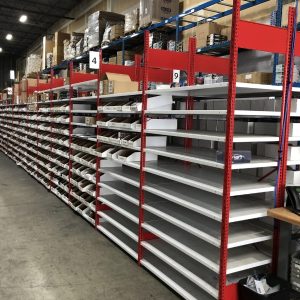
At Commander Warehouse, the question of open shelving versus closed cabinet storage comes up consistently across warehouse, retail, and industrial environments. It’s a practical decision with real implications for workflow efficiency, inventory visibility, and space utilization, and the right answer depends entirely on how your operation functions, not on a one-size-fits-all recommendation.
Learn all about first-in-first-out storage solutions.
What Each System Does Well
Open Shelving
Open shelving prioritizes access and visibility. In high-turnover pick-and-pack environments or parts rooms where staff need to locate SKUs quickly, open configurations reduce handling time and make inventory audits far more straightforward. Load capacities on heavy-duty open shelving units are also typically higher per shelf, supporting bulk storage and oversized items that won’t fit inside enclosed systems.
Key advantages:
- Faster product identification without opening doors or drawers
- Lower upfront cost per unit of storage space
- Better airflow for temperature-sensitive goods
- Easier integration with labelling and bin systems
Closed Cabinet Storage
Closed cabinets make sense when security, dust control, or presentation matters. Tool storage, chemical containment, archival filing, and front-facing retail environments all benefit from enclosed configurations. Lockable cabinets restrict unauthorized access, and enclosed units keep contents cleaner in high-particulate environments like manufacturing floors or woodworking shops.
Key advantages:
- Dust and contaminant protection
- Lockable options for controlled-access storage
- Cleaner visual presentation in customer-facing spaces
- Better suited for small parts that benefit from contained environments
How to Evaluate Your Storage Needs
Before specifying a system, work through these four factors:
- Access frequency: High-frequency picking favours open shelving. Low-frequency archival or secure storage favours closed cabinets.
- Item type: Bulk goods, bins, and large parts are open shelving territory. Small components, valuables, and documents belong in closed units.
- Environment: Dusty, high-traffic floors demand enclosed storage. Clean, climate-controlled spaces can handle open configurations without issue.
- Space constraints: Open shelving often allows for higher density vertical storage. Cabinets may require additional aisle width for door clearance.
Mixing Systems in the Same Facility
Most operations benefit from a hybrid approach. High-velocity SKUs and bulky goods sit on open shelving in the main pick area, while sensitive inventory, tools, and controlled items go into closed cabinets in secondary zones. The goal is matching the storage format to the specific demand of each product category rather than applying a single system across the board.
Making the Right Call
Neither open shelving nor closed cabinet storage is universally superior. The better system is the one that matches how your team actually works and what you’re storing. If your pick rates are high and visibility drives efficiency, open shelving delivers. If security and protection matter more than speed, closed cabinets earn their place.
When you’re ready to spec out the right configuration for your facility, our team can help you work through the details. Reach out to us by calling 604-574-5797.


