Small Parts Storage Systems for Manufacturing Facilities
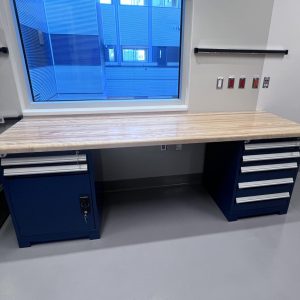
Disorganized small parts storage is a production problem, not just a housekeeping one. When fasteners, fittings, and precision components are scattered across open shelves or mismatched bins, workers lose time, picking errors increase, and floor space gets eaten up by systems that were never designed for the workload. At Commander Warehouse, we’ve spent over 50 years helping manufacturing facilities across Western Canada solve exactly this kind of problem. Getting small parts storage right means matching system type to workflow, environment, and parts mix, not just buying what’s cheapest or most familiar.
Know Your Storage System Options
Manufacturing facilities rarely need just one type of system. Most operations benefit from a combination, with each system type handling a specific category of parts.
Bin Shelving Systems
Open-front bins on industrial shelving are the workhorse of small parts storage. They’re best suited for high-turnover consumables, such as fasteners, hardware, and fittings, where visibility and fast access matter more than protection.
Key strengths:
- Immediate visual inventory at a glance
- Easy restocking from bulk supply
- Configurable bin sizes for mixed part dimensions
- Scalable as part counts grow
Modular Drawer Systems
For precision components, tooling, or anything that needs protection from dust, coolants, or handling damage, modular drawer cabinets are the right call. They offer far greater storage density than open shelving for parts under a foot in size, and divider configurations keep everything separated and locatable.
Where they perform best:
- Electronics and electrical components
- Precision machined parts
- Small tooling and gauges
- Any environment with machining debris or fluid exposure
High-Density Mobile Systems
If floor space is the constraint, high-density mobile shelving on rails is worth serious consideration. These systems eliminate fixed aisles by consolidating shelving into a compact bank that opens on demand. The trade-off is access time. These are better suited for parts accessed periodically rather than every hour.
Storage Cabinets
Lockable cabinets with compartmented interiors work well for controlled-access situations: expensive components, regulated materials, or tooling that needs to be signed out. They’re not high-turnover solutions, but they’re the right answer when accountability matters.
Match the System to the Environment
Manufacturing environments are hard on storage equipment. The system that works in a clean distribution centre won’t necessarily hold up in a machine shop or fabrication bay.
Evaluate your facility against these factors before specifying a system:
- Exposure to oils, coolants, or cleaning chemicals: steel construction with appropriate coatings handles this; light-duty plastic components won’t
- Dust and debris levels: enclosed drawer systems protect parts in high-particulate environments; open bins don’t
- Temperature variation: relevant in Western Canadian facilities without full climate control, affecting both materials and adhesive labels
- Load requirements: industrial parts are often heavier than they look; confirm load ratings per drawer or shelf before purchasing
Commercial-grade and industrial-grade aren’t interchangeable terms. A system rated for light office use will fail quickly under manufacturing conditions. Specify industrial-rated equipment from the start and it will outlast lighter alternatives by a decade or more.
Learn how to organize a high-volume picking operation without adding floor space.
Plan for Space Efficiency Before You Buy
Floor space in a manufacturing facility is production capacity. Every square foot dedicated to inefficient storage is a square foot that isn’t running parts.
Before configuring a system, work through these planning questions:
- What are your ceiling heights? Vertical storage utilization is the fastest way to increase capacity without expanding footprint.
- How frequently are parts accessed? Daily-use parts need to be close to the work cell. Monthly-use parts can go deeper into storage.
- What’s your parts size range? Mixed part dimensions require configurable bin or drawer systems that adapt to the inventory, not the other way around.
- Where are your production bottlenecks? Parts storage positioned more than 20 to 30 feet from assembly stations adds walk time and disrupts workflow.
- What’s your growth trajectory? Modular systems that expand without full replacement are worth the upfront cost for facilities that expect to scale.
Retrofitting Storage into an Active Facility
The majority of manufacturing facilities we work with aren’t building new; they’re optimizing what they have. Retrofitting storage into an active production environment requires sequencing. You can’t pull everything out at once.
A practical approach:
- Start with the parts that cause the most disruption when they’re hard to find
- Install new systems in phases, moving inventory section by section
- Use the transition as an opportunity to audit stock and eliminate dead inventory
- Confirm aisle clearances and floor load capacity before installing high-density or heavy-duty systems
Our sales reps are available for onsite reviews and can help assess an existing layout before any purchasing decisions are made. That kind of ground-level look at how a facility actually operates saves time and prevents costly mismatches between system spec and real-world conditions.
The Right System Pays for Itself
Good small parts storage is an operational investment, not just a line item. The difference between a system built for manufacturing and one that wasn’t shows up in worker efficiency, picking accuracy, floor space utilization, and how long the equipment actually lasts under daily industrial use.
If your facility is dealing with disorganized parts storage and you’re not sure where to start, reach out to us through our contact form. We’ll help you identify the right combination of storage systems for your parts mix, your environment, and your floor plan.


