First-In-First-Out Storage Solutions
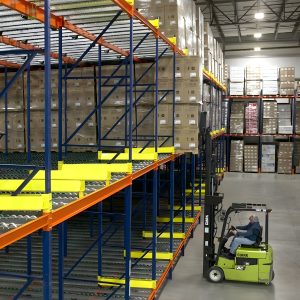
Managing inventory rotation has become more complex as warehouses handle diverse product lines with varying shelf lives. At Commander Warehouse Equipment, we’ve worked with operations across British Columbia and Alberta for over 50 years, helping them implement first-in-first-out storage solutions that keep products moving efficiently while minimizing waste.
Understanding FIFO Storage Methods
First-in-first-out storage ensures that older inventory moves out before newer stock, which matters most when dealing with dated products, perishable materials, or items subject to obsolescence. Implementation requires matching your storage system to your specific operational requirements.
Common FIFO System Types
Different FIFO approaches serve different facility layouts and product characteristics:
- Gravity flow systems use inclined roller tracks to automatically move pallets or cartons from loading areas to picking faces without manual intervention.
- Drive-through pallet racking creates separate loading and unloading aisles, allowing forklifts to place pallets from one end while pickers retrieve from the opposite side.
- Selective racking systems support FIFO through organized placement and retrieval protocols, though they demand more operational discipline.
Matching Systems to Product Requirements
Balancing Density and Accessibility
Storage density requirements often conflict with accessibility needs. High-density gravity flow systems excel when storing multiple pallets of identical SKUs with rapid turnover rates. These configurations work well in temperature-controlled environments where maximizing space offsets higher operating costs per square foot.
Operations handling diverse product mixes typically benefit from selective racking paired with clear date-tracking procedures. The key lies in establishing consistent receiving and picking practices that respect expiration timelines.
Physical Product Considerations
Product packaging determines which FIFO systems will function reliably. Gravity systems require specific pallet conditions:
- Uniform pallet dimensions across all loads
- Consistent load heights to maintain proper flow
- No protruding materials that could catch on rails or adjacent pallets
- Structurally sound pallets without warping or sagging
Operations using mixed pallet types or handling products with irregular dimensions need storage solutions that accommodate variability.
Implementation Factors That Affect Performance
Layout and Equipment Specifications
Loading and picking aisles must align with forklift traffic patterns to prevent congestion during peak periods. Adequate clearance heights, proper rail pitch, and appropriate speed controls become critical when installing gravity systems. These specifications require careful calculation based on actual load weights and dimensions.
Training and Operational Protocols
Operator training shapes how effectively any FIFO system performs. Teams need clear protocols for receiving placement, date verification, and picking sequences. Documentation procedures that capture lot numbers and expiration dates support both operational execution and regulatory compliance.
Facility Constraints
Facility constraints sometimes limit which FIFO approaches will fit your space. Ceiling heights, column spacing, floor load capacities, and existing infrastructure all influence system design. We evaluate these factors during onsite assessments to recommend configurations that work within your building’s parameters while meeting throughput targets.
Long-Term Operational Considerations
FIFO systems require ongoing attention to maintain effectiveness. Regular inspections catch wear on roller tracks, ensure brake mechanisms function properly, and verify that guide rails remain aligned. Damaged components compromise flow rates and create safety hazards.
We’ve seen how warehouse layout planning combined with appropriate FIFO storage systems improves inventory accuracy while reducing product loss. Our team can assess your specific requirements and develop solutions that address your operational challenges. Contact us at 604-980-8511 to discuss first-in-first-out storage options for your facility.


