Selecting Industrial Shelving for High-Humidity Environments
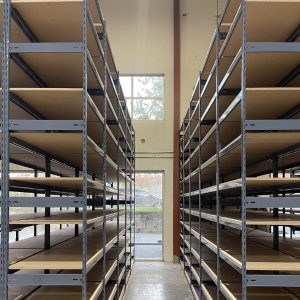
Moisture is one of the most damaging variables in any storage environment, and it doesn’t announce itself until the corrosion is already visible. At Commander Warehouse, we’ve helped Western Canadian operations get this specification right for over 50 years, across food processing facilities, cold storage warehouses, coastal distribution centres, and industrial plants where condensation is a daily reality. Get the specification wrong and you’re looking at accelerated structural degradation, failed load ratings, and replacement costs that far exceed the original investment.
Why Humidity Destroys Standard Shelving
Standard steel industrial shelving isn’t designed to survive prolonged moisture exposure. Carbon steel corrodes predictably when relative humidity stays elevated or when shelving is exposed to temperature cycling that causes repeated condensation. Corrosion compromises structural integrity at connection points and upright columns, which is exactly where load-bearing capacity is most critical.
The failure mode is gradual, which makes it easy to underestimate. By the time rust is obvious on the surface, the underlying material has often already lost meaningful strength. In regulated industries like food production or pharmaceutical storage, that also creates contamination exposure you don’t want to explain to an auditor.
Material Selection: The First Decision That Matters
Matching material to environment is non-negotiable. These are the primary options worth evaluating:
Stainless Steel (304 or 316 Grade)
The benchmark for food-grade and high-sanitation environments. Grade 316 offers superior chloride resistance, making it the correct choice for coastal facilities or anywhere cleaning chemicals contain salt compounds. Heavier and more expensive than alternatives, but the service life justifies the cost in demanding applications.
Galvanized Steel
Hot-dip galvanizing creates a zinc-iron alloy barrier that performs well in moderately humid environments. A cost-effective choice for cold storage or general warehousing where chemical exposure is limited. Watch for flux-cleaned welds, as these areas are common weak points where galvanizing is thinner or absent.
Epoxy-Coated Steel
A viable option for light to moderate humidity, particularly in produce coolers or floral storage. Coating integrity is everything here. Chips or scratches expose bare steel directly to moisture, which rules it out for heavy washdown environments.
Aluminum shelving appears in some humid-environment applications, but lower load capacity limits its usefulness in most industrial contexts.
Find out why powder-coated finishes matter for long-term performance.
Design and Configuration Factors
Material choice gets most of the attention, but configuration decisions affect performance in humid conditions just as much.
Open vs. Closed Decking
Wire decking or perforated shelves allow air circulation, reducing moisture pooling on shelf surfaces and speeding drying after washdown. In food processing or cold storage specifically, open decking is almost always the better call. Solid decking traps standing water and creates conditions where microbial growth becomes a concern alongside corrosion.
Fasteners and Connection Hardware
Shelving is only as durable as its weakest component. Zinc-plated or standard carbon steel fasteners will corrode well before the shelving structure shows wear, and corroded hardware is both a structural and a contamination risk. In any environment where humidity is a consistent factor, specify stainless steel hardware throughout.
Clearance and Installation
Keep shelving off the floor in wet or high-condensation environments. Floor-level contact is where moisture accumulates longest and where corrosion initiates fastest. Levelling feet with appropriate material ratings help, but the real answer is designing the installation with drainage and airflow in mind from the start.
Better understand weight distribution for multi-tier shelving systems.
Maintenance and Longevity
Even correctly specified shelving requires a maintenance approach matched to the environment. Inspect connection points, uprights, and shelf supports on a scheduled basis rather than waiting for visible deterioration. Treat any coating damage immediately; a small chip left unaddressed becomes a corrosion site within weeks in high-humidity conditions. Avoid abrasive cleaning tools on coated or galvanized surfaces, as they accelerate coating breakdown. If corrosion is found during inspection, verify that load ratings haven’t been compromised before relying on original specs for those components.
In high-washdown environments, document your cleaning chemicals and cross-reference them against the shelving manufacturer’s chemical resistance data. Many industrial cleaners are corrosive to galvanizing at full concentration, and that’s not a detail that surfaces until the damage is done.
Matching Specification to Application
There’s no single answer that works across every humid environment. Cold storage has different requirements than a seafood processing floor. A produce cooler operates differently than a pharmaceutical washdown room. The right specification accounts for temperature range, cleaning frequency, chemical exposure, and load requirements together, not any one factor in isolation.
When operational conditions are genuinely demanding, material upgrades and proper configuration pay for themselves faster than most procurement teams expect. The cost of getting it right the first time is almost always lower than the cost of replacing shelving that was underspecified for the conditions it had to survive.
If you’re specifying shelving for a humid or washdown environment and want to get the selection right the first time, reach out to us through our contact form. We’ll work through the application details with you and recommend what actually fits the conditions.


