How to Reduce Forklift Damage to Pallet Racking
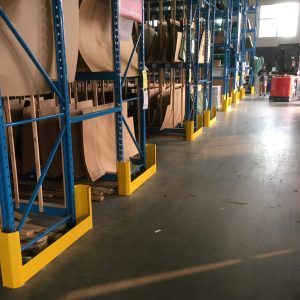
Forklift impacts are one of the most consistent and costly threats to pallet racking systems in active warehouses. At Commander Warehouse, we’ve seen how reducing forklift damage comes down to a combination of smart layout decisions, physical protection, and operational discipline. Neglecting any one of those layers leads to compounding structural problems over time.
Why Rack Damage Costs More Than It Looks
A bent upright rarely stays a bent upright. Minor impact damage compromises the load capacity of an entire bay, and that risk multiplies the longer it goes unaddressed. The true cost extends well beyond replacement parts:
- Lost productivity during inspection, repair, or unplanned teardown
- Product damage from load collapses or unstable bays
- Increased liability exposure when structural integrity is in question
- Cascading replacement costs when mismatched components are used in repairs
Cosmetic damage is often structural damage in disguise. That distinction matters when loads are sitting at height.
Root Causes of Forklift Impact
Operator error gets blamed first, but the environment usually plays just as large a role. Common contributors include:
- Tight aisle configurations that don’t account for forklift turning radius or load width
- Poor lighting and sightlines, especially at aisle ends and corners
- Productivity pressure that encourages speed over precision
- Insufficient site-specific training. Generic forklift certification doesn’t prepare operators for the specifics of a particular facility’s layout.
- Equipment mismatch, such as running a counterbalance forklift in a space better suited to a reach truck or narrow aisle machine
Fixing the behaviour without fixing the environment produces limited results.
Physical Protection Measures
Column Guards and End-of-Aisle Protectors
Upright column guards are a first line of defence at floor level, where the majority of forklift impacts occur. End-of-aisle protectors are equally critical. Those positions see the highest traffic and the sharpest turning movements. Properly anchored guards absorb and redirect impact energy before it reaches the rack structure itself.
Guide Rails and Floor Marking
In narrow aisle configurations, floor-mounted guide rails help operators maintain alignment without relying entirely on visual judgment. Supplement these with floor striping that clearly delineates rack faces and travel lanes, height clearance markers at aisle entries and overhead obstructions, and visual warning indicators at column bases in high-traffic zones.
Visibility cues work best when they’re consistent and maintained. Faded floor tape or missing markers stop doing their job fast.
Operational Controls That Actually Hold
Infrastructure alone won’t solve the problem. The operational side requires the same level of attention.
Site-Specific Operator Training
Beyond certification, operators need to understand the specific layout they’re working in: where the blind corners are, which aisles require slower approach speeds, and what the clearances are for the equipment they’re running. This isn’t a one-time onboarding item. It should be revisited when layouts change or new equipment is introduced.
Traffic Management
One-way aisle flow reduces head-on conflicts where the layout allows it. Designated pedestrian corridors, kept separate from forklift traffic zones, are non-negotiable in busy facilities. Speed limits in congested areas, particularly near racking, need to be set and enforced rather than posted and forgotten.
Damage Reporting Culture
Unreported impacts are the ones that become serious incidents. Build a reporting process that’s straightforward and non-punitive. Operators who know they won’t face immediate consequences for flagging a minor hit are far more likely to report problems before they escalate. A brief visual check of uprights, base plates, and beam connections by a supervisor keeps small issues from growing into costly ones.
Layout Planning as a Long-Term Protection Strategy
This is where many facilities leave significant value on the table. Rack damage doesn’t always start with a careless operator. It often starts with a warehouse layout that was never designed for the equipment running through it.
- Proper aisle width needs to account for the combined footprint of the forklift and its load, with adequate clearance on each side.
- Turning radii need to match the equipment in use.
- Rack placement relative to dock doors and staging areas shapes traffic patterns across every shift, for better or worse.
Getting the layout right from the start reduces ongoing damage risk without requiring constant behavioural intervention. Our team has more than 50 years of experience helping Western Canadian operations plan and install racking systems that work with their equipment and workflows, not against them.
When Damage Occurs: Replace or Repair?
Bent or twisted uprights require replacement, full stop. Surface abrasions or paint damage at floor level may be cosmetic, but any deformation to an upright, beam connector, or base plate warrants a structural assessment before that bay goes back into service. When sourcing replacement components, matching the specifications of the existing system isn’t optional. Mismatched components undermine the load ratings the entire system was designed around.
Protecting Your Investment Starts at Installation
Well-specified racking systems, installed with traffic patterns in mind, hold up better over the long run. If your current setup is absorbing more impacts than it should, the layout itself may be part of the problem. Reach out to us through our contact form to talk through your racking configuration and what changes would make the most operational difference.


